Spooky (but not too spooky!)
I set out to explore the challenge of bringing my love of an oft-maligned literary medium to a new generation of readers. Poetry has always been a huge part of my life, ever since I learned how to write haikus around the age of six.
Fall is my favorite time of year, and I knew I wanted to start with Halloween, because it’s my absolute favorite holiday.
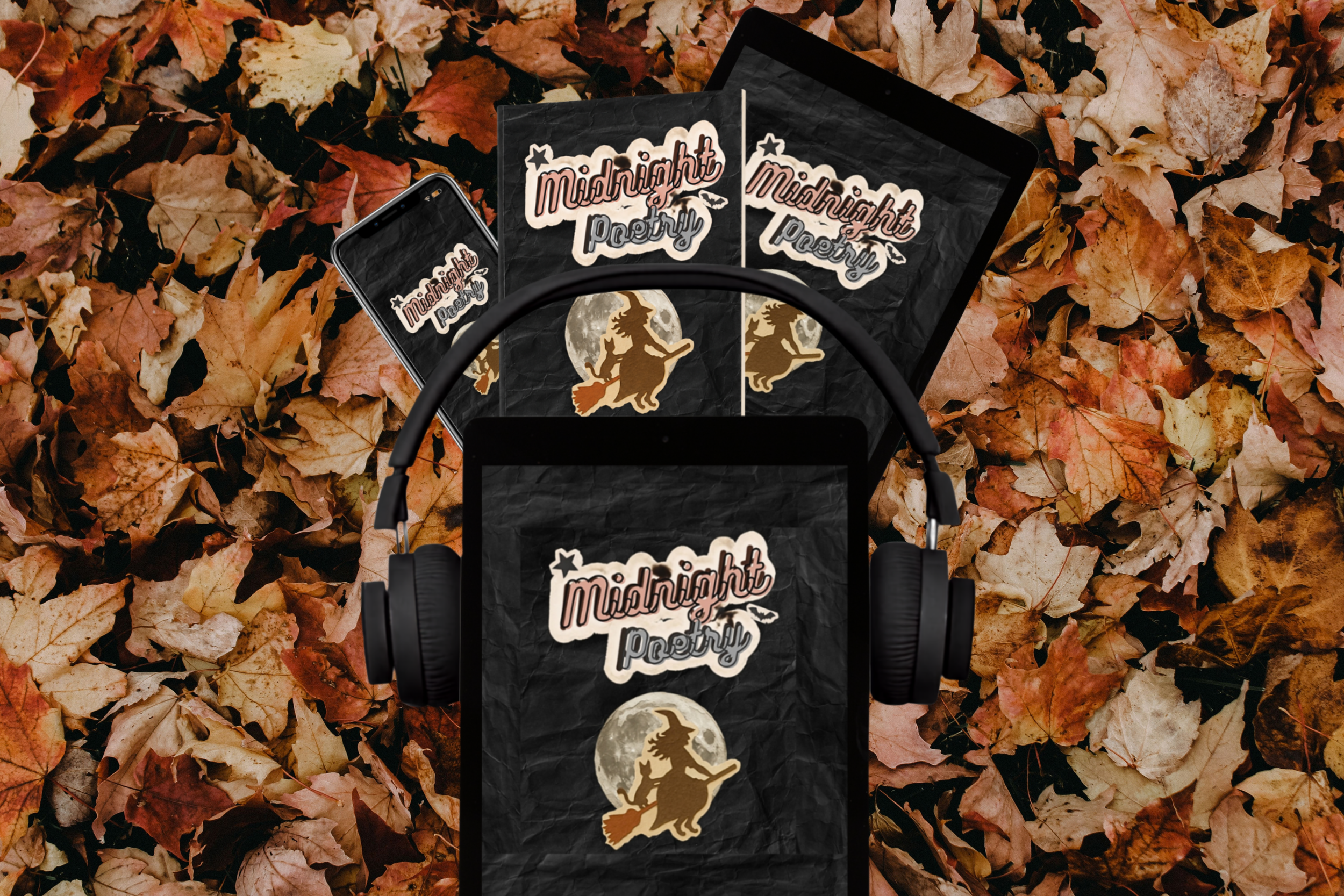
Classic poetry has some wonderfully creepy material. With Midnight Poetry: A Brambletale Press Anthology, I wanted to give young readers a reason to step inside and explore it.
Preferably with a flashlight.
I think a lot of people hear the word ‘poetry’ and get cold feet.
But don’t worry, this is not your school poetry class.
Putting the Collection Together
The research phase was probably my favorite part of the whole process.
The challenge was finding poems that belonged together while giving readers something different with each turn of the page. Poe, Dickinson, Shakespeare, and the other featured writers each bring their own kind of uneasiness. Some poems tell a story. Others leave you with a strange mental image or a weird feeling that follows you down a gloomy hallway.
For an anthology aimed at ages 8–12, that variety mattered. I wanted the collection to feel inviting, with enough mystery to keep curious young readers moving through unfamiliar language without boring adult readers along the way.
Alongside those classic works, I included my own poem, “Dorothy Good.” The book is also dedicated to Dorothy, a child of Salem, giving the collection a personal point of connection between the historical and the imagined.
There were quite a few poems that sadly didn’t make the cut for one reason of another, maybe someday I could be convinced to do a longer second edition.
Getting the Pages Right
The book continued to evolve through added poems, a revised cover, and several adjustments to the interior illustrations, which I did myself (all except the black cat at the beginning of the book, drawn beautifully by my beautiful wife).
Then came the less glamorous work: margins, page numbering, illustration placement, and making sure the paperback layout behaved itself.
Move one thing, check everything. Revise, revise, revise. Publishing has a (sometimes cruel) sense of humor. Anyone who has ever edited their own work gets what I’m saying.
The details matter, especially with poetry. Line breaks and spacing are part of how a poem is read, and the surrounding design needs to give the words room.
I strove to keep my anthology as faithful to each original author’s vision as possible and managed to keep almost every poem completely unabridged.
Tuning In to Something Even Stranger
With the audiobook, I wanted to breathe new life into the project, so I fleshed out an original fictional story to help set the scene for the poems from the physical book.
Fun fact: I grew up pretty sheltered, with very limited access to the pop culture of the time.
When I was young, I spent hours listening to old dramatic radio productions on vinyl records and cassette tapes. I remember hearing productions like The War of the Worlds by H.G. Wells, Adventures in Odyssey, Lights Out and more. I was especially affected by the “Chicken Heart” story that Bill Cosby told on his 1966 comedy album Wonderfulness. That one gave me nightmares for years, but I kept listening to it, always on the edge of my seat.
There was a very specific aesthetic I was aiming for with this project, a sort of 1930s golden age of weird radio meets 1990s children’s pulp horror. Much of what inspired me to write this story actually came from the historical account of Bayocean, the famed Oregon coastal resort town that completely eroded and disappeared into the Pacific Ocean. It’s an astounding and heartbreaking tale in its own right.
Working again with the super-talented narrator and audio production wizard Brandon Miller, I developed the collection into a theatrical listening experience inspired by the old-fashioned horror radio shows of years past. The fictional KALE broadcast, reporter Chip, poet V. B. Jones, and the ghostly Genevieve created a story around the poems, building toward “The Raven” as the mysterious finale.
That was an exciting shift: the anthology now had a world listeners could enter, grounded in local Oregon state history.
Across the page and the recording, the hope stayed the same. Give children an intriguing first encounter with classic poetry and a unique, spooky and sometimes humorous adventure to tie it all together.
So grab a trusty flashlight, a warm blanket, and some tasty snacks. Flip the light switch, and discover Midnight Poetry, there’s plenty waiting here in the dark.