Golden Tickets, Giant Peaches, and Gobblefunk: The Story of Roald Dahl
Roald Dahl understood a delicious truth about young readers: strange stories do not scare them away. Strange stories make them lean closer.
Give a child a chocolate river, a peach larger than a house, a genius girl with dreadful parents, or a friendly giant who collects dreams, and that child may follow you anywhere. Dahl built entire worlds around that invitation. In his stories, adults were not automatically wise, children were not automatically powerless, and the smallest person in the room often had the sharpest mind.
His own story, however, was far more complicated than a tidy fairy tale. Dahl was a Welsh-born son of Norwegian parents, an oil-company employee in East Africa, a Royal Air Force pilot, a wartime intelligence worker, a writer of sinister adult fiction, a Hollywood screenwriter, a medical innovator, and one of the most influential children's authors of the twentieth century. He also expressed some controversial personal views that remain an inescapable and part of his legacy.
To understand Roald Dahl honestly, we have to make room for both the remarkable imagination and the serious flaws of the man who possessed it.
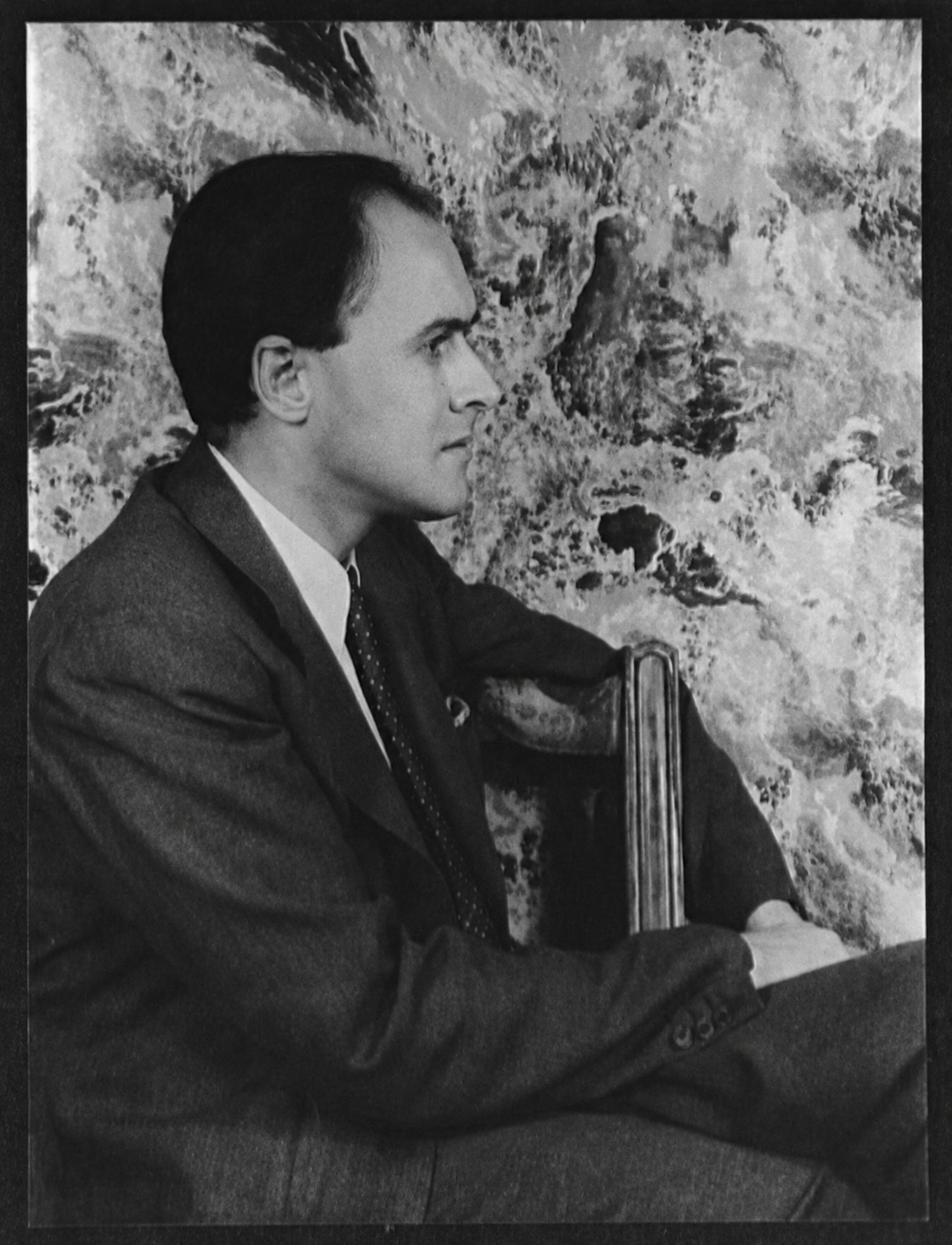
A Childhood Between Wales and Norway
Roald Dahl was born on September 13, 1916, in Llandaff, near Cardiff, Wales. His parents, Harald and Sofie Dahl, were Norwegian, and Roald was named after the polar explorer Roald Amundsen. He grew up in Britain but spent many childhood summers visiting his mother's family in Norway.
Loss entered his life early on. In 1920, when Dahl was just three years old, his seven-year-old sister Astri passed away from appendicitis, and his father of pneumonia only weeks later. His mother chose to remain in Britain and raised the rest of the family there.
Dahl later described his school years in Boy: Tales of Childhood. He remembered rigid rules, corporal punishment, cruel older students, and adults who could misuse their authority. Those memories seem to cast long shadows across his fiction. Miss Trunchbull, the terrifying headmistress in Matilda, did not arrive from nowhere.
School also supplied a sweeter kind of inspiration.
While attending Repton, Dahl recalled that Cadbury sent pupils boxes of experimental chocolates and asked them to rate the new creations. Decades later, that memory helped feed the machinery of Willy Wonka's factory.
But Before the Chocolate Factory, There Was a Cockpit
Dahl did not go directly from school to the children's shelf. After leaving Repton in 1934, he joined the Shell oil company and eventually worked in East Africa. When World War II began, he enlisted in the Royal Air Force.
In 1940, while delivering an aircraft to his squadron, Dahl crash-landed in the Libyan desert. He suffered serious head and back injuries and spent months recovering in a military hospital. He later returned to combat and flew a Hawker Hurricane in Greece, including during the Battle of Athens. Lasting headaches from the crash eventually ended his active flying career.
The war then carried him to Washington, D.C., where he served as an assistant air attaché at the British Embassy and became involved in intelligence work. It was there that another writer, C. S. Forester, encouraged him to write about his flying experiences. Dahl's account appeared in The Saturday Evening Post in 1942 under the title “Shot Down Over Libya.”
The fighter pilot had found a second cockpit: the blank page.
Gremlins, Grown-Up Tales, and a New Direction
Dahl's first children's book, The Gremlins, appeared in 1943. Its troublesome little creatures came from Royal Air Force folklore, where mechanical problems were often blamed on invisible gremlins meddling with aircraft.
Children's books did not immediately become his only focus. Dahl also built a successful career writing short fiction for adults. Collections such as Someone Like You and Kiss Kiss featured suspense, cruelty, black comedy, and sudden reversals. A polite dinner, a quiet hotel, or an ordinary marriage could turn sinister within a single paragraph.
That taste for surprise never left him. When Dahl eventually devoted more of his imagination to younger readers, he did not file down all the sharp edges. He simply handed the flashlight to the child.
A Peach Rolled In, Then Came a Golden Ticket
James and the Giant Peach was published in 1961, followed by Charlie and the Chocolate Factory in 1964. Those books established the pattern readers would come to recognize: an unhappy or overlooked child, an impossible opening into adventure, grotesque villains, strange food, swift punishments, and a reward for courage or decency.
More unforgettable stories followed. Fantastic Mr Fox arrived in 1970, Danny the Champion of the World in 1975, The Twits in 1980, George's Marvellous Medicine in 1981, The BFG in 1982, The Witches in 1983, and Matilda in 1988.
Dahl's worlds were whimsical, but rarely gentle. Children were threatened, neglected, transformed, terrorized, and occasionally invited to watch horrible adults receive spectacular consequences. That darkness bothered some grown-ups, but children understood the joke immediately.
Here’s a fun fact:
Unlike the 1990 film adaptation of The Witches, Dahl’s original novel never turns its young hero back into a boy. He remains a mouse and happily plans to spend his shorter life battling witches alongside his grandmother.
Why Children Took His Side
Dahl often wrote as if he and the child reader shared secret information that the adults had missed.
He knew that children notice hypocrisy. They know when a punishment is unfair, when a bully is hiding behind a title, and when an adult expects respect without behaving respectably. Dahl exaggerated those injustices until they became enormous enough to topple. The greedy became grotesque, the cruel became ridiculous, and the underestimated child discovered a hidden advantage.
Matilda has intelligence and mysterious power. Sophie has courage. Charlie Bucket has decency. Danny has ingenuity and a loving father. None of them begins with much control over the world, but Dahl allows each of them to change it.
He also understood that a children's story can be frightening and funny at the same time. The danger creates suspense. The absurdity lets the reader breathe. Somewhere between those two sensations, courage becomes possible.
When Words Refuse to Behave
Dahl treated language like a toy box that had been left unlocked.
He stretched words, spliced them together, bent their meanings, and invented new ones when ordinary English looked too well behaved. The BFG gave readers such creations as “snozzcumber,” “whizzpopping,” and “scrumdiddlyumptious.” The sounds often carried the meaning before a child ever reached for a dictionary.
This wordplay did more than decorate the stories. It invited children to participate. A reader could decode a strange word from its rhythm, sound, and context, then invent an even stranger one. In 2016, Oxford University Press published the Oxford Roald Dahl Dictionary, devoted to both the everyday and invented language found in his work.
“Don’t gobblefunk around with words.”
Dahl made vocabulary feel slightly illegal, which is a splendid way to make it interesting, and thus make reading way more fun.
The Lines That Learned to Mischief
For many readers, Dahl's stories are inseparable from Quentin Blake's loose, lively ink drawings. Yet Blake was not Dahl's original illustrator. Their first book together was The Enormous Crocodile in 1978, and their collaboration continued until Dahl's death.
Blake's pictures brought a kind of motion to Dahl’s words. They made them wobble. A raised eyebrow, a bent knee, or a few frantic lines could reveal vanity, fear, wickedness, or delight. The drawings looked as though they might leap off the page before an adult could order them back into place.
It became one of children's publishing's most recognizable partnerships: Dahl supplied the verbal mischief, and Blake gave it elbows.
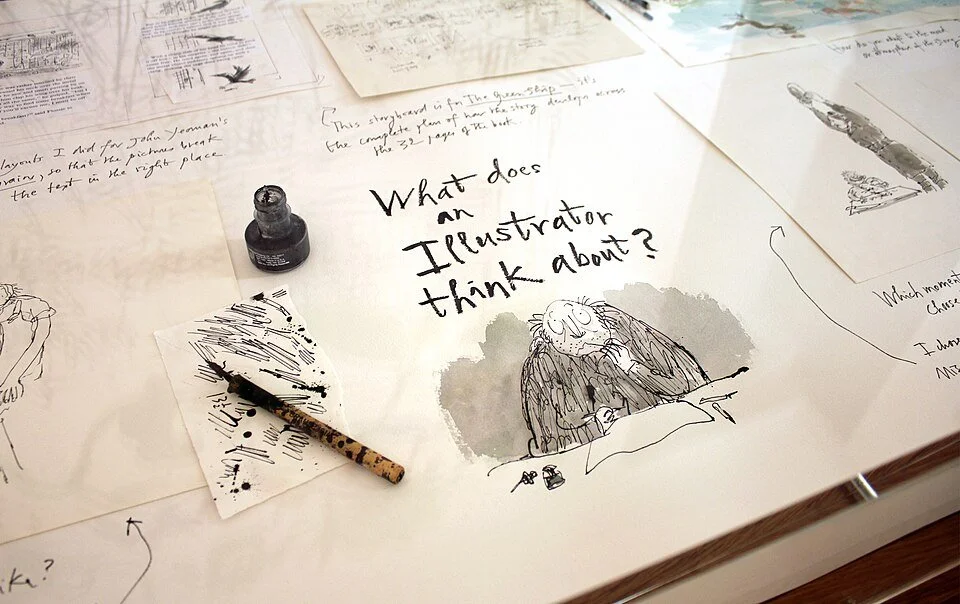
Image modified from original. (Cropped) Image Credit: Inside Stories at House of Illustration, photograph by Designhistory2, 2014, via Wikimedia Commons. Licensed under CC BY-SA 4.0.
The Hut Where the Worlds Were Made
Many of Dahl's famous books were written in a small hut in the garden of his home in Great Missenden, Buckinghamshire. He worked in a self-adapted armchair with a writing board across his lap, usually drafting in pencil on yellow lined paper.
The hut contained an Anglepoise lamp, a jug for pencils, and a ball made from hundreds of chocolate wrappers. It was not glamorous. It was private, practical, cluttered, and fiercely protected from interruption.
Dahl kept drafts and working notes that show how heavily he revised his stories. He once reduced the process to five useful words: “Good writing is essentially rewriting.” The interior of the hut and its contents are now preserved by the Roald Dahl Museum and Story Centre.
A Writer Beyond the Children's Shelf
Dahl's career had several surprising side doors. He co-wrote the screenplay for the 1967 James Bond film You Only Live Twice and the screenplay for the 1968 family musical Chitty Chitty Bang Bang. His adult stories also became the basis of the television anthology Tales of the Unexpected.
He even contributed to medical technology. After his infant son Theo developed hydrocephalus following a serious accident, Dahl worked with neurosurgeon Kenneth Till and engineer Stanley Wade on an improved cerebral shunt. The device became known as the Wade-Dahl-Till valve and was used to treat other children.
It is a peculiar résumé: fighter pilot, spy, chocolate-factory architect, Bond screenwriter, and co-inventor of a medical device. Dahl did not lead a quiet life, even when sitting alone in a hut.
Why His Stories Still Hold a Golden Ticket
Roald Dahl died on November 23, 1990, at the age of 74. His characters, however, have proved much harder to contain. They continue to appear in classrooms, libraries, theaters, films, musicals, and bedtime reading around the world.
His strongest stories endure because they make reading feel like an alliance. They tell children that intelligence can defeat intimidation, kindness can survive absurdity, and language belongs to anyone bold enough to play with it.
At Brambletale Press, we believe classic stories should open doors to wonder without asking readers to switch off their judgment. Dahl's career offers both inspiration and warning. His best work reminds us never to talk down to children. His worst words remind us that language can wound as easily as it can enchant.
That leaves readers with a responsibility and an invitation: keep the imagination, examine the history, challenge the harm, and never let the words become too well behaved.
Sometimes all a young reader needs is a library card, a little nerve, and one very strange peach.
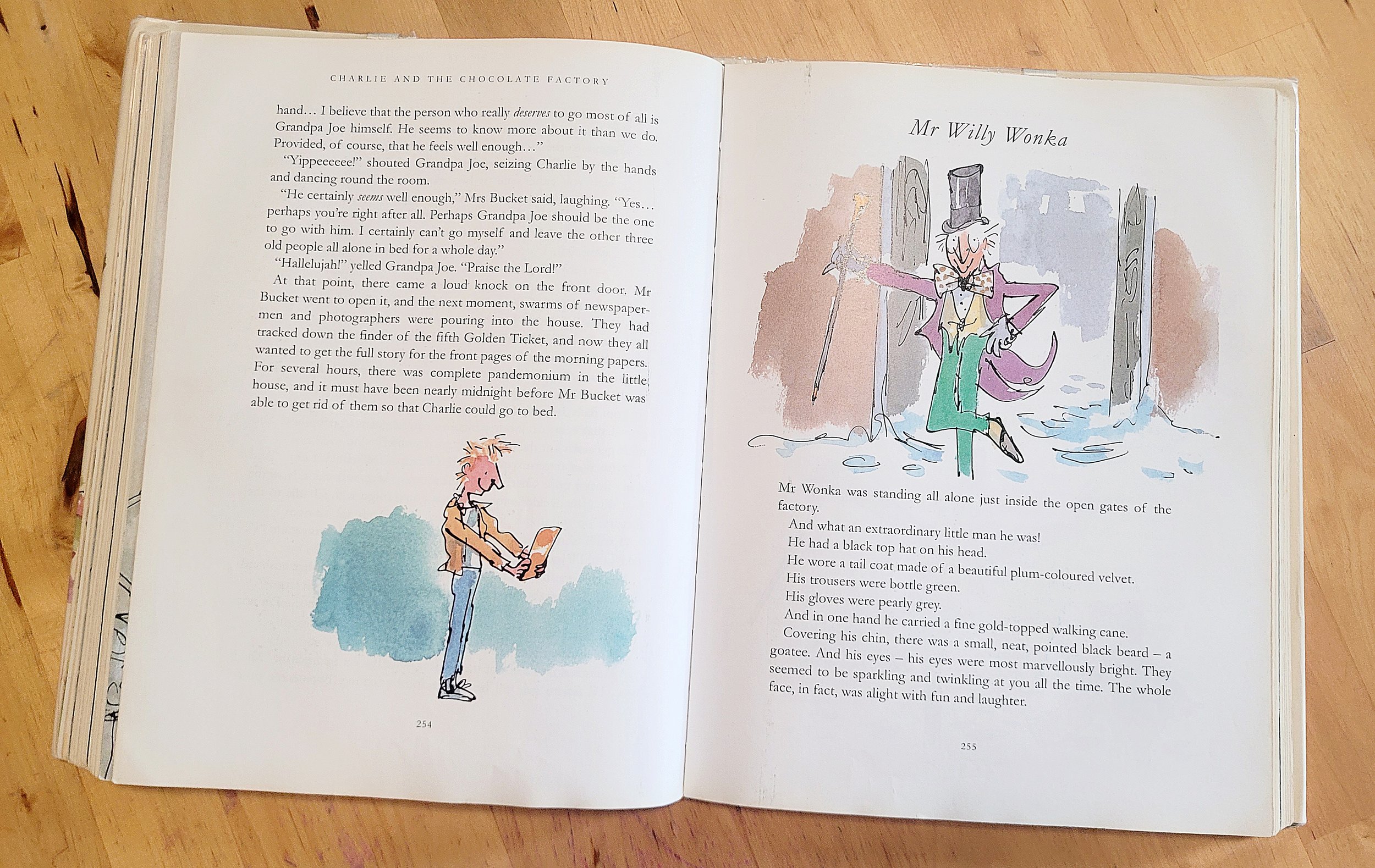
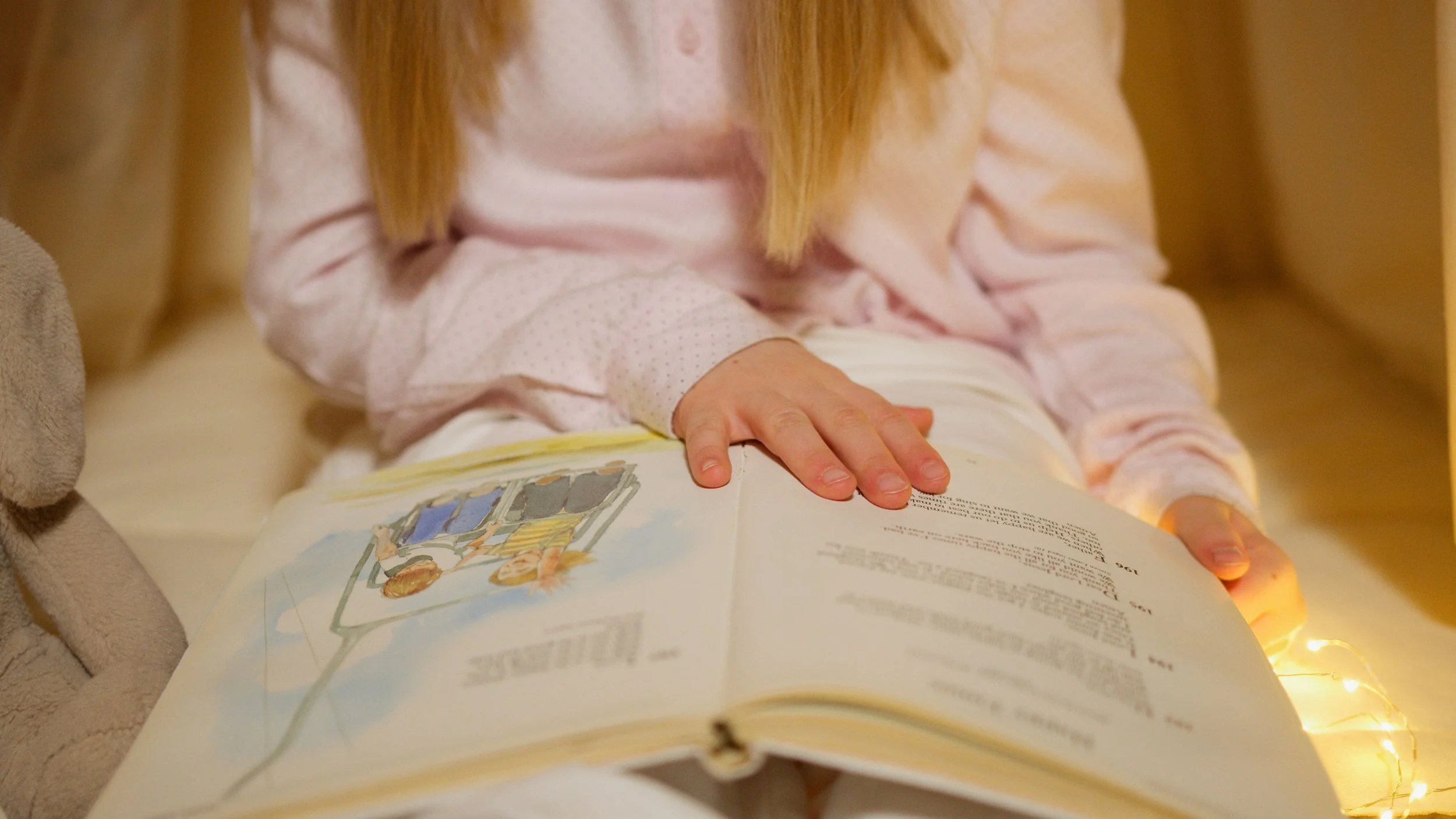
A glimpse inside The Roald Dahl Treasury, a rich collection of stories, poems, letters, and illustrations from across Dahl’s imaginative career. Photo by Philip Graham, Brambletale Press.
Brambletale Press does not own or claim rights to Roald Dahl's books, characters, illustrations, or related intellectual property shown in editorial images used with this article. All such materials belong to their respective rights holders. Images are included for educational and editorial commentary only, and no affiliation or endorsement is implied. Individual photographs remain subject to their credited licenses.
