Reading Beyond the Book: How Video Games Can Support Kids’ Literacy
As an independent children’s book author and publisher, I spend a great deal of time arguing for books. So here is a sentence liable to get me ejected from the sternest corner of the library:
Sometimes, playing a video game can be one of the best ways to keep a child reading.

Not every video game, of course. Forty minutes spent repeatedly trying to launch a cartoon plumber over a lava pit may teach persistence, but it is unlikely to build much vocabulary. Yet many games cannot be understood, much less completed, without reading dialogue, following written instructions, interpreting clues, comparing descriptions, remembering details, and making decisions based on written information.
Let me say this emphatically: this is not a proposal to trade library cards for controllers. Books can cultivate the imagination, help children interpret complex ideas, and provide the pleasure of reading for its own sake. Reading books remains essential.
The case for games is narrower and more nuanced: for children who are already playing video games, choosing text-rich titles can turn some of that existing screen time into supplemental literacy practice.
A Supplement, Not a Substitute
A well-rounded reading life can have several layers:
Classroom reading explicitly teaches decoding, fluency, vocabulary, comprehension, and how to approach increasingly complex texts.
Books read for pleasure give children sustained practice, personal choice, deeper immersion, and a chance to build an identity as readers.
Text-rich video games can reinforce those skills through clues, dialogue, decisions, problem-solving, and immediate reasons to understand what was read.
These forms do not compete for the title of “real reading.” They just serve different purposes.
A video game cannot provide everything a skilled teacher or a good book can provide. It can, however, give a child one more place to practice. If we dismiss every word that appears outside a traditional book, we may overlook some of the reading children do most willingly.
What Counts as Reading, Anyway?
The RAND Reading Study Group defined reading comprehension as the process of extracting and constructing meaning through interaction with written language. Notice what that definition does not require: paper, chapters, a dust jacket, or a quiz afterward.
A child who reads a character’s warning, connects it to an earlier clue, predicts what may happen, and changes course has done more than recognize words. That child has interpreted language and acted on meaning.
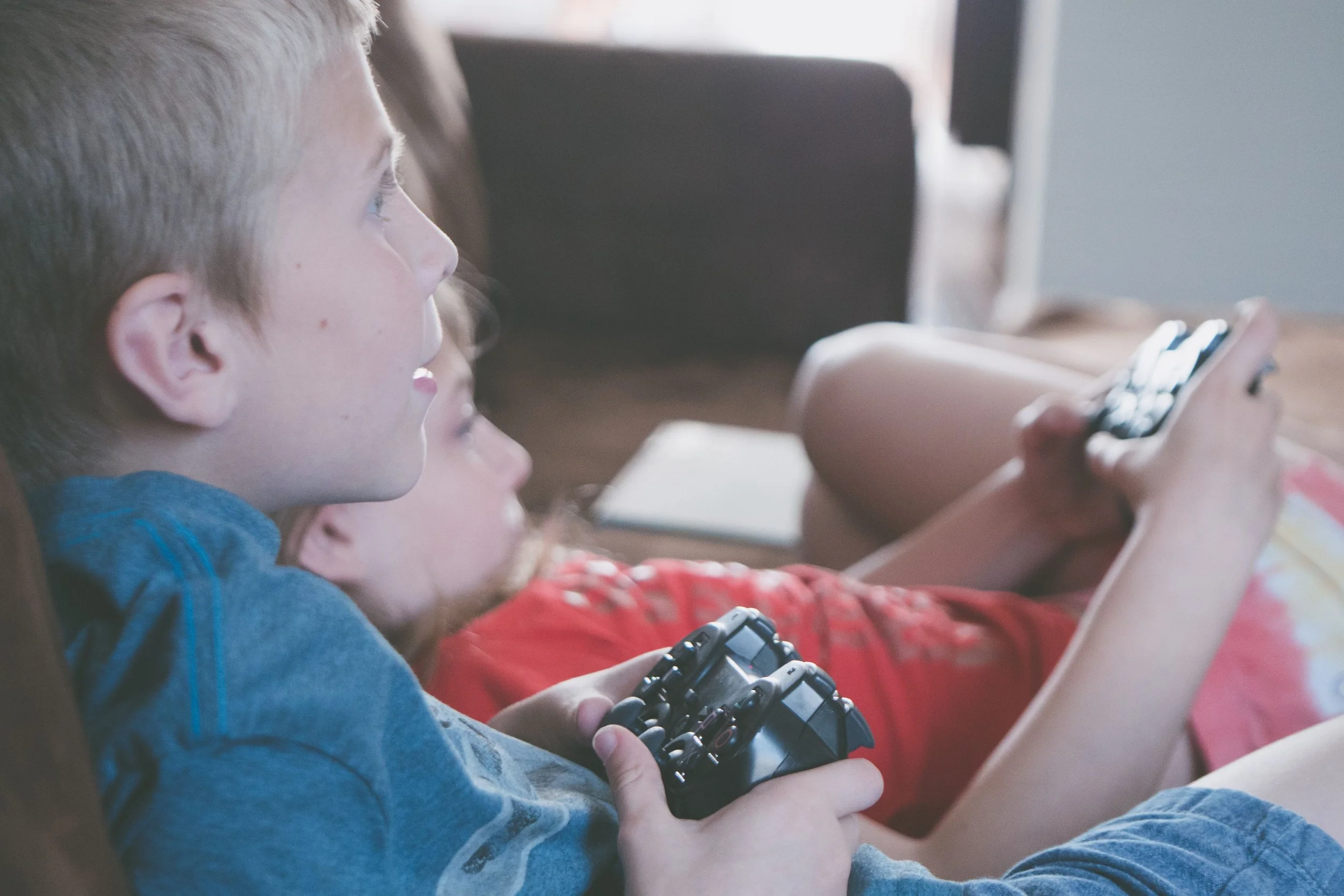
Text-rich games can ask players to:
Follow written directions and quest objectives
Learn unfamiliar words from context
Compare items, abilities, maps, menus, and descriptions
Infer what a character means but does not say directly
Track motives, relationships, and events across a long story
Choose a response and observe how language changes the outcome
Reread confusing passages because progress depends on understanding them
What the Research Actually Says
Games can supplement formal instruction and recreational book reading by creating meaningful practice, motivating further reading and writing, and giving reluctant readers another entrance into stories.
In a 2020 National Literacy Trust survey of 4,626 young people ages 11 to 16 in the United Kingdom, 79.4 percent of those who played video games said they read game-related material at least once a month. That included in-game communication, reviews, blogs, books, and fan fiction. Another 62.5 percent wrote something related to games at least monthly, such as scripts, advice for other players, fan fiction, blogs, or reviews.
The same survey found that 73.1 percent of players who did not enjoy reading felt more immersed in a video game’s story than in a book-based text. More than a third of players believed gaming helped them become better readers.
Controlled research also suggests that design matters. In one small randomized study, 37 second graders with persistent reading difficulties used the literacy game GraphoLearn for six weeks. The game group developed word-reading accuracy faster than the control group, but researchers did not find transfer effects in reading comprehension, spelling, or reading fluency. In plain English, a game may improve the skill it actually makes a child practice, but the benefits do not automatically spread to every part of literacy.
That is exactly why parents should look beyond the glowing rectangle and ask a better question: What is this game asking my child to read, understand, remember, and do?
This is also why text-rich games belong in the “reinforcement” category. They can provide useful repetition and motivation, but they should not be expected to diagnose reading difficulties or replace the broader range of language found in books.
“Reading for Fun” Is Still Reading
Adults have a peculiar habit of making pleasure sound academically suspicious.
“Comic books are not real reading.” “Graphic novels are too easy.” “Fantasy does not count.” “Repeatedly reading the same funny series does not count.” “Reading a game guide definitely does not count.”
The research does not support this hierarchy.
The OECD’s 2018 PISA results found a positive association between reading enjoyment and reading performance in every participating country and economy, even after accounting for gender and socioeconomic background. A longitudinal study of 3,583 members of the 1970 British Cohort Study also linked reading for pleasure between ages 10 and 16 with substantial progress in vocabulary and, to a lesser degree, mathematics. The relationship with cognitive progress was stronger than the relationship with parental education.
Again, association is not the same as a magic cause-and-effect formula. Strong readers may enjoy reading partly because they are already good at it. Still, enjoyment matters because children tend to return to activities they find rewarding. Practice becomes much easier to sustain when nobody has to drag the reader to the page.
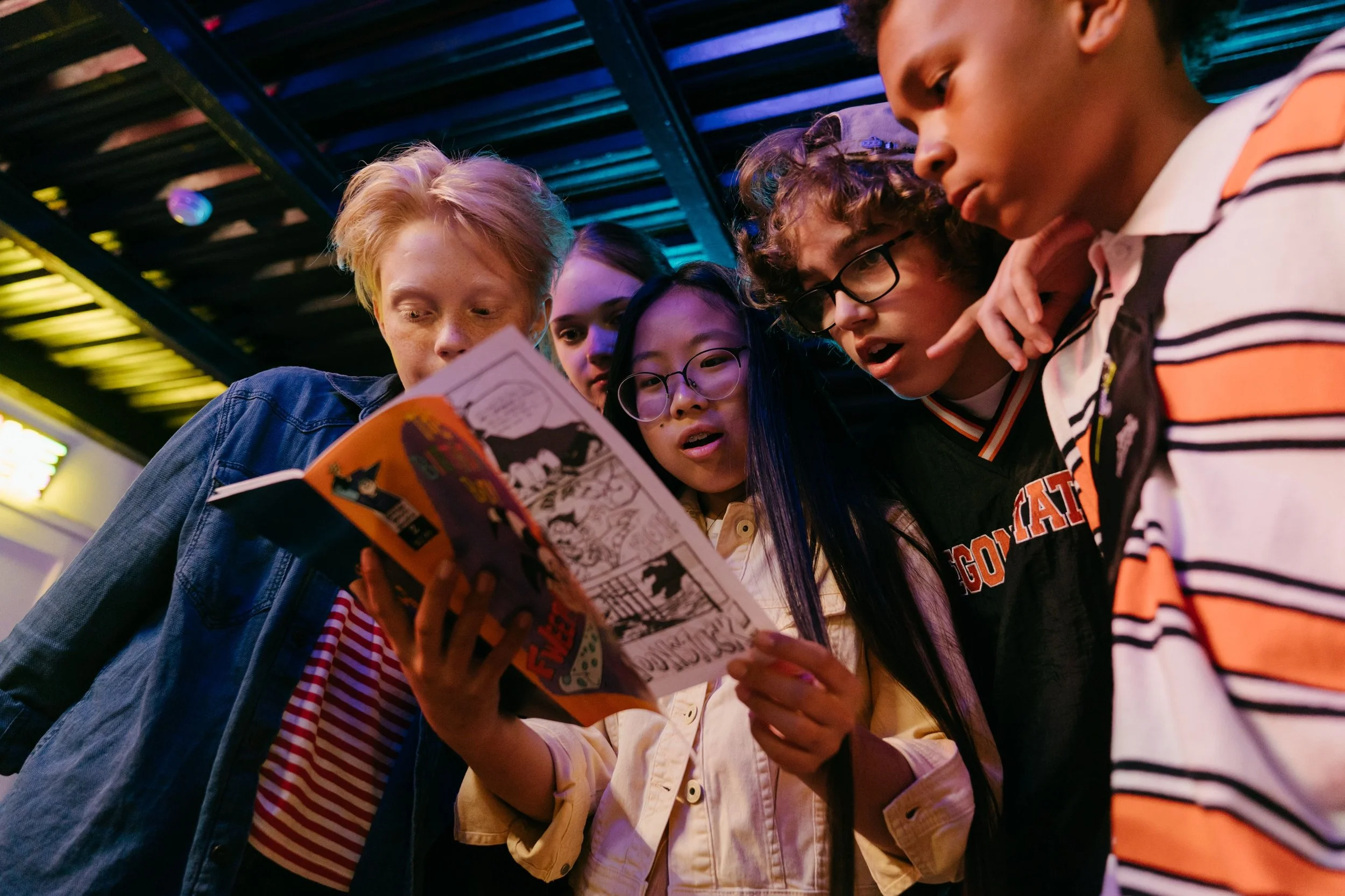
Comics offer a particularly useful rebuttal to the “not real reading” claim. In a 2023 National Literacy Trust survey of 64,066 young people ages 8 to 18:
58.6 percent of comic readers said they enjoyed reading, compared with 33.1 percent of those who did not read comics.
35.7 percent of comic readers read something daily in their free time, compared with 22.8 percent of non-comic readers.
86 percent of comic readers rated themselves as good or very good readers, compared with 76.3 percent of non-comic readers.
These numbers do not prove that comics caused every difference, but they do demolish the notion that comic readers are somehow avoiding reading.
Pictures can support context, tone, sequencing, and inference. Games add movement, sound, choice, and feedback. None of these formats is identical to a prose novel, and they do not need to be. A healthy reading life can contain picture books, chapter books, comics, instructions, poetry, subtitles, game dialogue, encyclopedias, fan fiction, and the back of a cereal box in a moment of breakfast desperation.
A Brief History of Games That Made Reading Part of Play
Video games have been recruiting readers for nearly as long as video games have told stories.
Zork: A Novel That Refused to Continue Until You Found the Right Verb
The original Zork began as a mainframe text adventure in 1977, with the commercial Zork I arriving in 1980. The game described rooms, objects, dangers, and events almost entirely in prose. Players typed commands such as “open mailbox” or “take lantern” to explore.
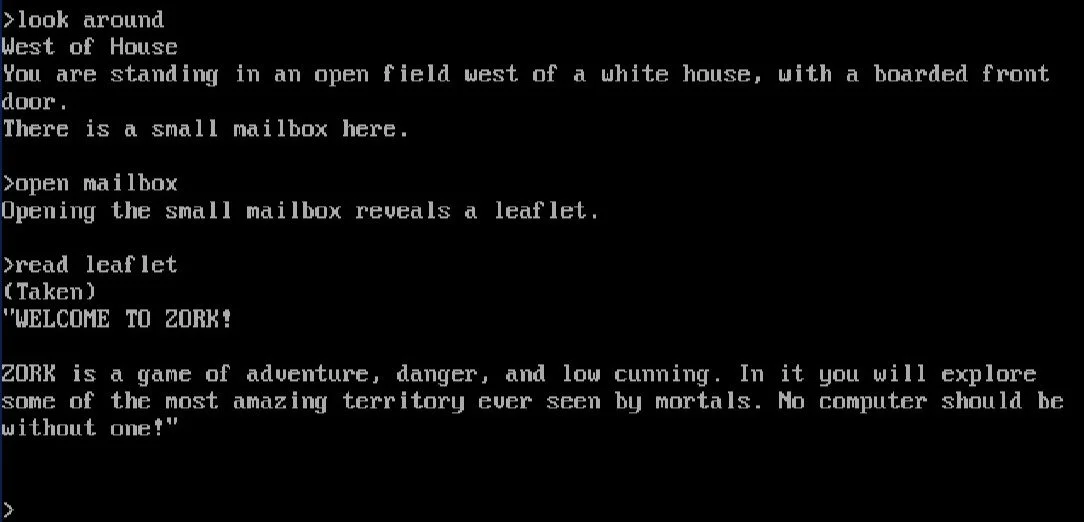
Screenshot from Zork I: The Great Underground Empire (Infocom, 1980), captured by Philip Graham. Used for commentary and criticism.
There was no cinematic sequence to rescue a player who skimmed. To survive the Great Underground Empire, players had to read carefully, form a mental map, experiment with language, and recognize how the game interpreted verbs and nouns.
Its difficulty and occasional peril make it a better co-play choice for confident older children, but its literacy demand is undeniable. The written word is not decoration in Zork. The written word is the world.
King’s Quest: When the Text Adventure Grew Pictures
Roberta Williams’s King’s Quest, released in 1984, helped establish the graphical adventure genre. Its colorful fairy-tale world gave players a character to move around the screen, but the original computer version still used a text parser. Players had to type what they wanted Sir Graham to do, sometimes leading to less than satisfactory results.
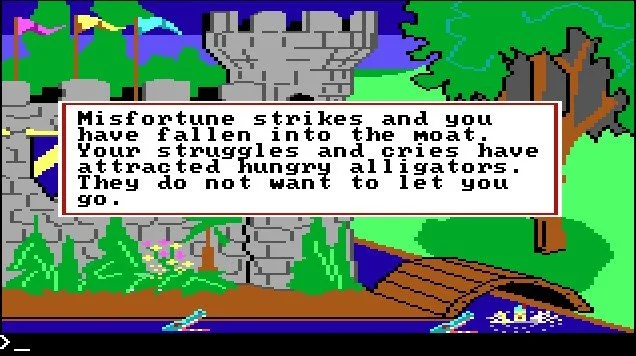
Screenshot from King’s Quest I: Quest for the Crown (Sierra On-Line, 1984), captured by Philip Graham. Used for commentary and criticism.
The combination required observation, vocabulary, problem-solving, and a willingness to revise an imprecise command. It also taught an entire generation to save the game before approaching anything remotely dragon-shaped.
The early games include fairy-tale danger and some abrupt character deaths, so parents may want to play alongside younger children.
Living Books: The Storybooks You Can Play
In the early 1990s, the Living Books series turned familiar picture books into interactive CD-ROM stories. From Mercer Mayer’s Just Grandma and Me to Marc Brown’s Arthur’s Teacher Trouble, these quintessential edutainment games let children hear narration, follow highlighted text, and explore animated pages.
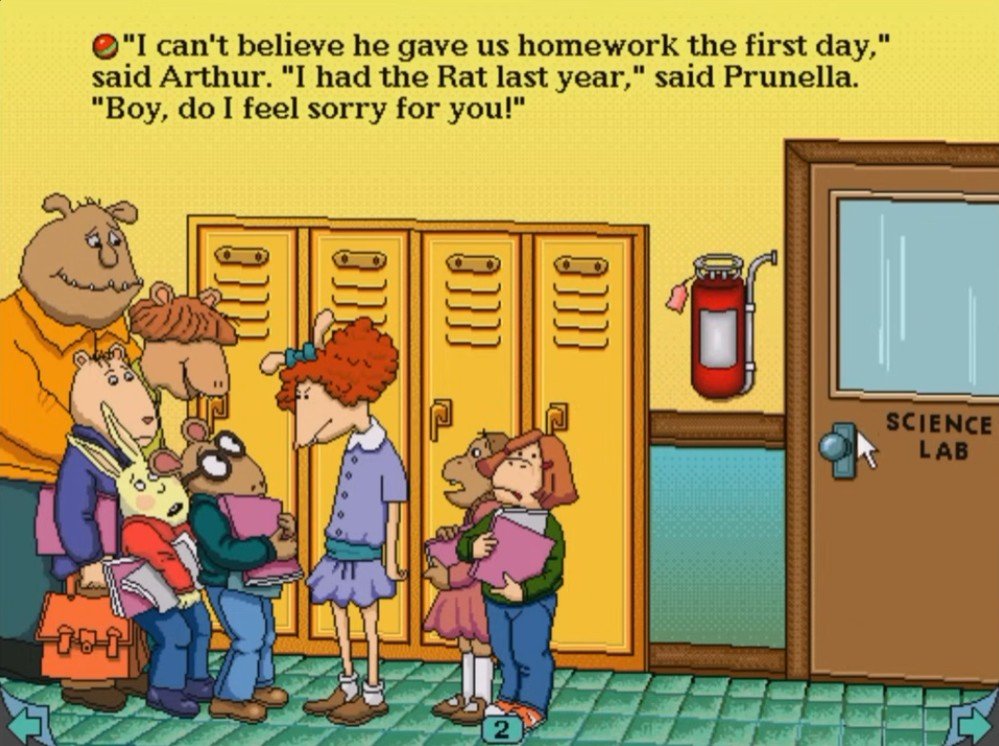
Screenshot from Arthur’s Teacher Trouble (Living Books/Brøderbund Software, 1992), captured by Philip Graham. Used for commentary and criticism.
These games were especially well suited to emerging readers because the spoken language, printed words, illustrations, and actions supported one another. Arthur’s Teacher Trouble even centered its story and wordplay around a spelling bee. Children could replay a page, hear a sentence again, and discover that words were things they could touch, hear, and manipulate.
This was not a replacement for sitting with a child and reading the original book. It was another way into the same story.
The ClueFinders: Literacy Disguised as a Saturday-Morning Mystery
The Learning Company launched The ClueFinders in 1998 for elementary-age players. The series wrapped grade-based material in animated mysteries, sending its young detectives through puzzles involving language arts, reading comprehension, spelling, mathematics, science, and logic.
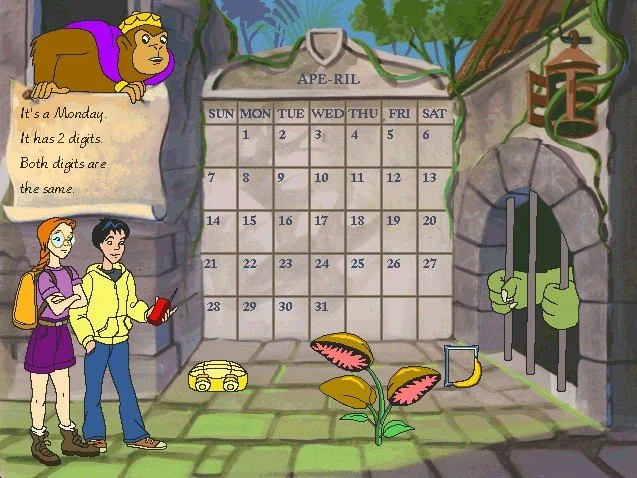
Screenshot from The ClueFinders 3rd Grade Adventures: The Mystery of Mathra (The Learning Company, 1998), captured by Philip Graham. Used for commentary and criticism.
The clever part was not simply putting a spelling exercise on a computer. The games gave the exercise a reason to exist. A correct answer produced a clue, opened a route, or moved the mystery forward. Practice became part of an adventure rather than a detached worksheet with better sound effects.
Pokémon: Reading as Strategy
The Pokémon series began in 1996 and has quietly kept generations of children reading ever since. Players read conversations, move descriptions, item effects, ability text, signs, menus, and battle messages. They compare statistics, remember type relationships, and decide which information matters before acting.
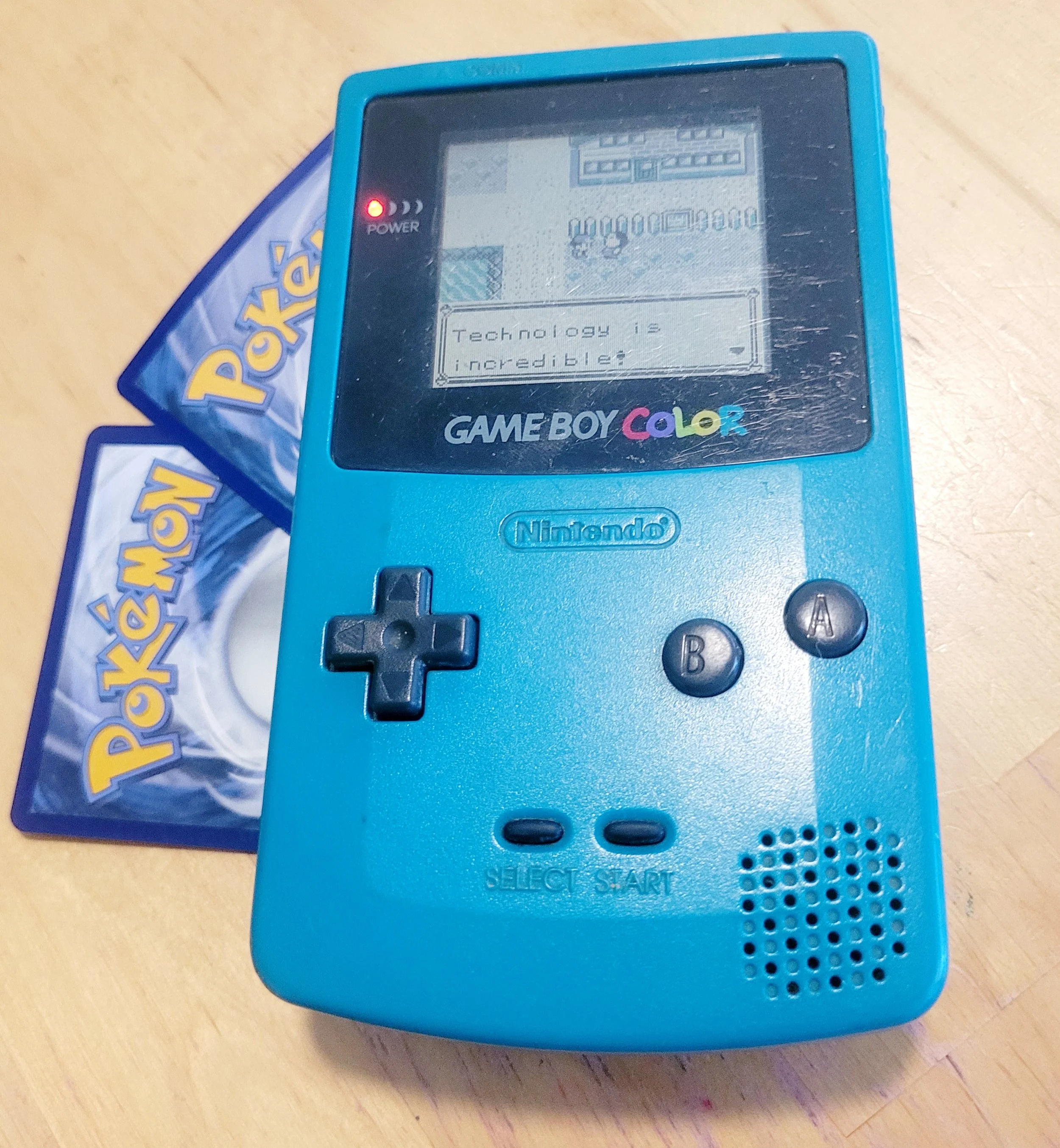
The prose may arrive in short bursts, but the reading has a clear purpose. The child wants to understand because understanding helps them play.
Original photograph by Philip Graham featuring Pokémon Yellow Version: Special Pikachu Edition (Game Freak/Nintendo, 1999), running natively on a Game Boy Color, and Pokémon Trading Card Game cards. Pokémon © Nintendo/Creatures Inc./GAME FREAK inc. Used for commentary and criticism.
Many children then carry that interest beyond the game into trading cards, handbooks, comics, online databases, strategy guides, and playground debates conducted with the solemnity of international diplomacy.
The Legend of Zelda: Reading Before Full Voice Acting
Earlier entries in The Legend of Zelda series carried their plots, instructions, puzzles, histories, and character relationships largely through on-screen text. Players had to speak with townspeople, inspect objects, remember rumors, and interpret clues.
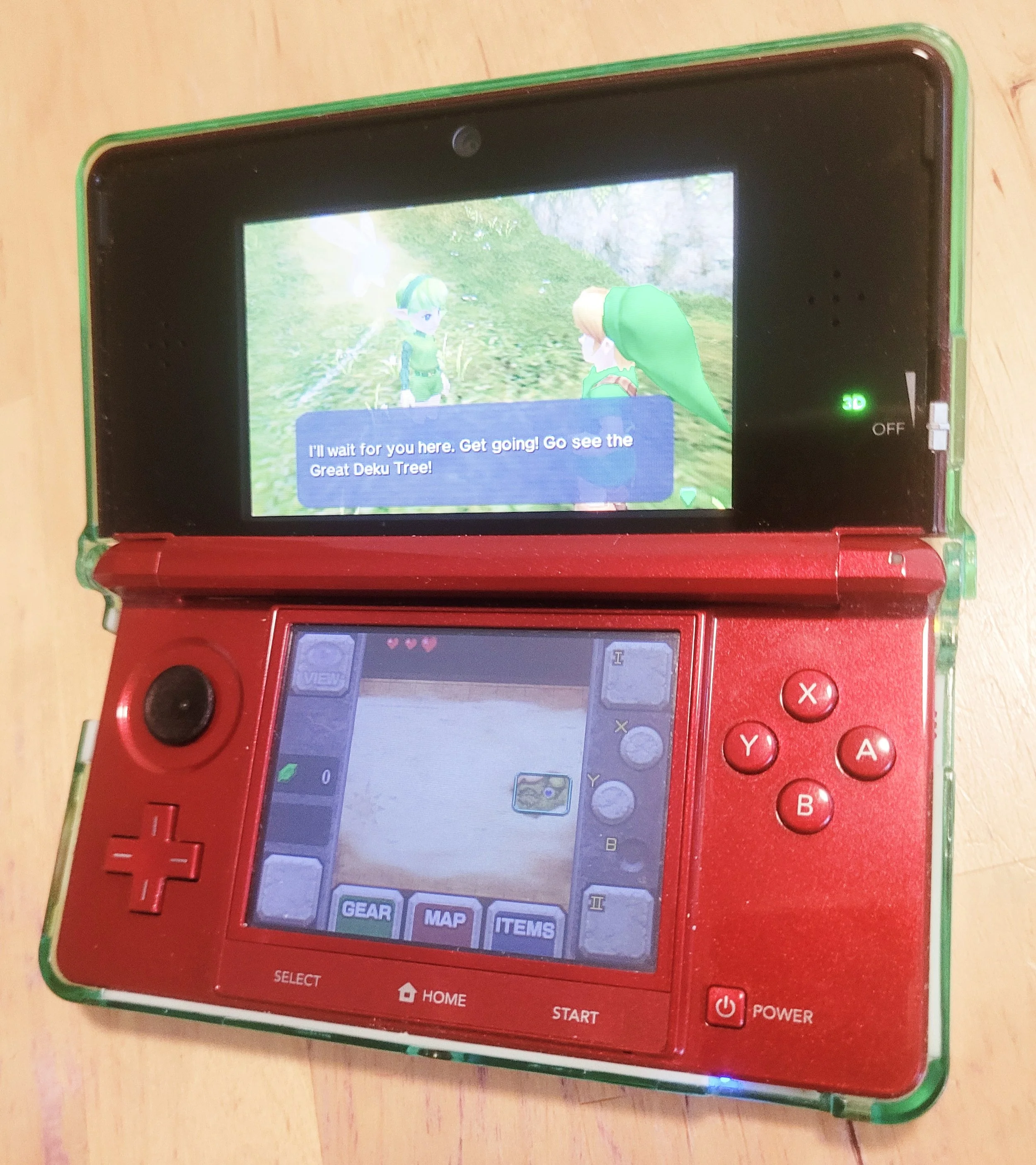
The Legend of Zelda: Ocarina of Time, for example, uses written dialogue and hints to guide a time-spanning adventure. Players must speak with characters, remember songs and clues, interpret signs, and track objectives across two versions of Hyrule.
Original photograph by Philip Graham featuring The Legend of Zelda: Ocarina of Time 3D (Grezzo/Nintendo, 2011) running natively on a Nintendo 3DS. Used for commentary and criticism.
Age suitability varies considerably across the series, and parents should check the rating and content summary for the specific game rather than relying on the friendliness of the franchise mascot.
Animal Crossing: Everyday Language With a Social Purpose
Since 2001, Animal Crossing has made written communication part of ordinary village life. Players read conversations, letters, announcements, museum information, item names, and requests from neighbors. They can also write letters and short messages of their own.
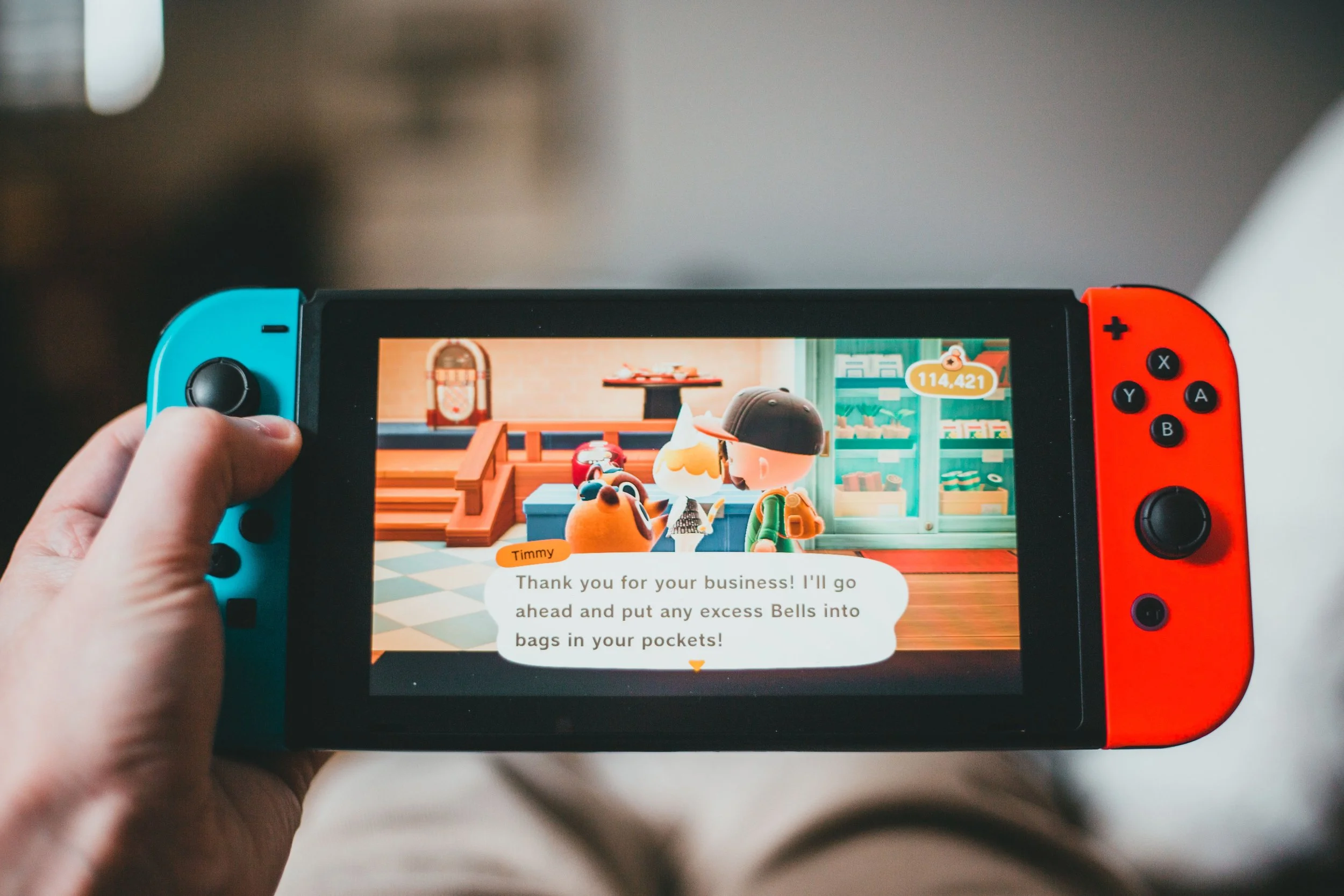
Photo by Erik Mclean via Pexels.com, featuring Animal Crossing: New Horizons on Nintendo Switch.
The language is usually brief and conversational, but it serves recognizable purposes: asking, joking, thanking, describing, inviting, and maintaining relationships. For early readers, that can make text feel less like an assignment and more like a tool people use.
Ōkami: Mythology, Clues, and a Celestial Brush
Capcom’s Ōkami, first released in 2006, places players inside a world inspired by Japanese mythology and ink-wash painting. Its dialogue, quest instructions, folktale references, and puzzle clues require attentive reading, while the Celestial Brush lets the player alter the world through drawn gestures.
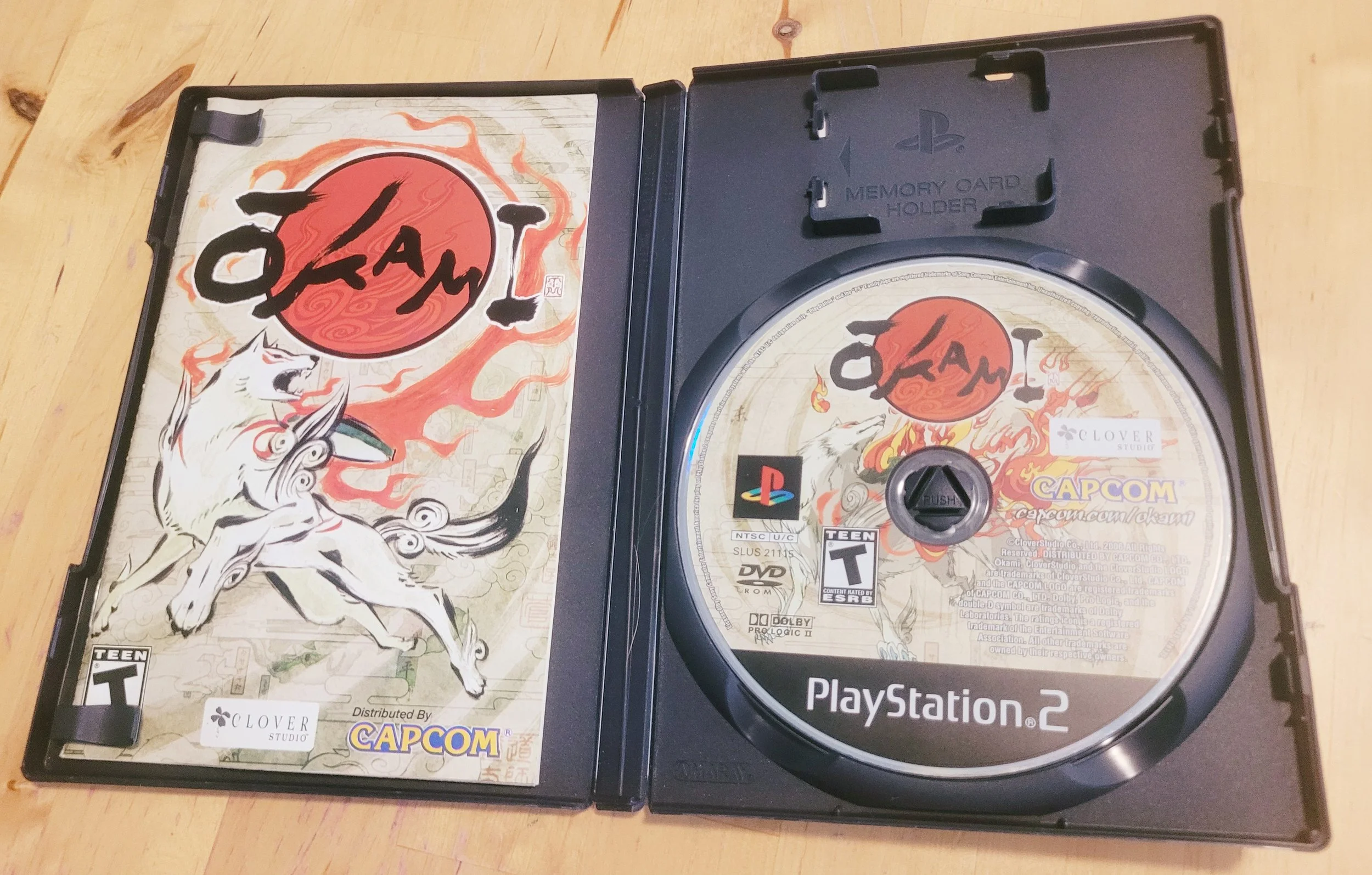
Original photograph by Philip Graham featuring an open PlayStation 2 case for Ōkami (Clover Studio/Capcom, 2006), including the original game disc and instruction manual. Used for commentary and criticism.
This is a strong example for older children and teens, not small children. Ōkami HD is rated Teen by the ESRB. A beautiful art style should never substitute for checking the actual content rating.
Myst: When Books Became Doorways
Cyan’s Myst, first released in 1993, drops players onto a silent, seemingly abandoned island with almost no direct instruction. Progress comes through exploration: reading notes and journals, studying diagrams, noticing patterns, and connecting fragments of information scattered across worlds known as Ages. In Myst, books are more than background decoration. Some literally act as portals to other worlds.
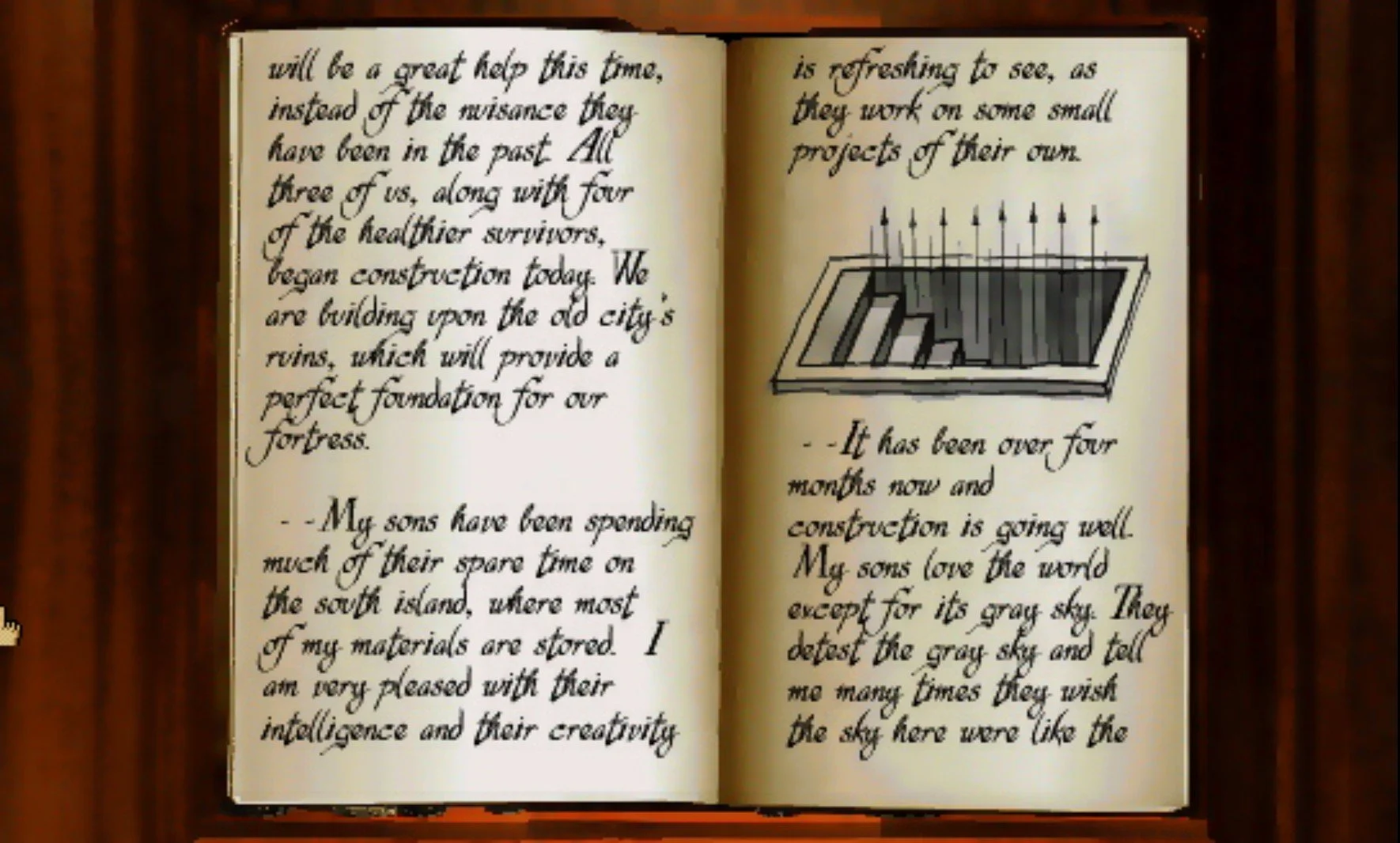
Myst is not wall-to-wall prose, but the words it presents matter. A written note establishes the first trail of clues, while journals give the Ages history and context.
Screenshot from the Windows PC edition of Myst (Cyan/Brøderbund, 1994), captured by Philip Graham. Used for commentary and criticism.
Players must combine that information with environmental evidence and competing testimony. The game rewards close reading alongside observation, inference, information tracking, and patient note-taking. Its quiet pace and cryptic puzzles make it better suited to older children or family co-play, preferably with a notebook nearby. (You will be taking notes… So. Many. Notes!) Few games make rereading a page feel so much like uncovering a secret.
Undertale: Reading People, Not Just Words
Toby Fox’s Undertale, released in 2015, is built around dialogue, humor, character behavior, and moral choice. During encounters, players can fight, but they can also read an opponent’s words and emotional cues, choose an appropriate action, and resolve the conflict without violence. Decisions drastically alter later dialogue and story outcomes.
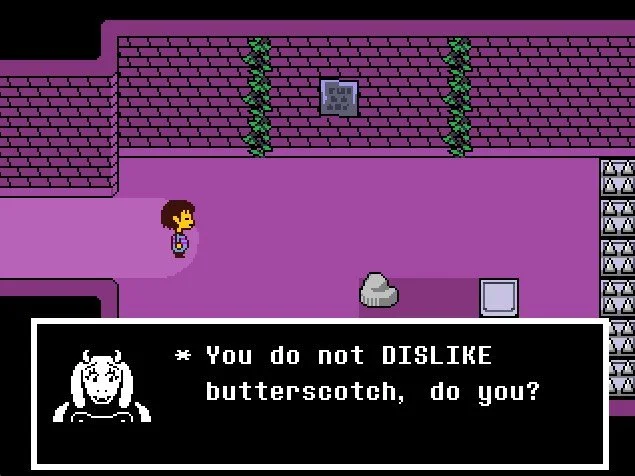
Screenshot from the Windows PC edition of Undertale (Toby Fox, 2015), captured by Philip Graham. Used for commentary and criticism.
That makes reading part of empathy and inference. The player must ask not only “What does this sentence say?” but “What does this character need, and what might happen if I respond this way?”
Just a heads up, Undertale is rated E10+ for Everyone 10+, but some of its themes become darker than its cheerful pixel art initially suggests.
How to Make Existing Game Time More Literacy-Rich
This approach does not require adding more screen time to a child’s day. Start with the gaming time that already exists. Choosing a more text-rich game, playing together occasionally, or connecting a favorite game to books and writing can make that time more purposeful.
Buying a dialogue-heavy game and leaving a child alone with it is not a literacy plan. A little adult involvement can turn casual exposure to words into richer supplementary practice.
1. Choose games in which comprehension matters
Look for dialogue choices, written clues, quest logs, item descriptions, mysteries, maps, correspondence, or puzzles that depend on language. If every text box can be skipped without consequence, the literacy opportunity is thin.
2. Play together, but let the child do the reading

When playing together, resist the urge to narrate every line immediately. Take turns, help with difficult words, and give the child time to work through a sentence. For a new reader, sharing the job keeps frustration from swallowing the fun.
3. Ask real questions, not surprise quizzes
Try:
“What do you think that character meant?”
“Which clue changed your mind?”
“What do you predict will happen next?”
“Why did you choose that response?”
“Where can we look for the next clue?”
These questions invite interpretation and thoughtful conversation.
4. Build a bridge back to books and writing

A game can become the beginning of a larger reading trail:
Read a Pokémon handbook or graphic novel.
Compare Ōkami with an age-appropriate collection of Japanese folktales.
Write an Animal Crossing letter or village newspaper.
Draw a Zelda dungeon map and label its clues.
Keep a notebook of unfamiliar vocabulary words from an RPG.
Write a walkthrough, character diary, alternate ending, or fan story.
Visit the library to research an animal, myth, historical period, or scientific idea from the game.
The previously mentioned National Literacy Trust survey found that game-related reading and writing often extend well beyond the game itself. Parents can help build that bridge deliberately. A child’s enthusiasm for a game can become the invitation to open a handbook, comic, mythology collection, novel, or blank notebook.
5. Protect the rest of childhood
Quality matters, but balance still matters too. The American Academy of Pediatrics now encourages families to consider five factors when evaluating media use: the child, the content, whether media is being used mainly to calm, what it is crowding out, and communication about its use.
A literacy-rich game can still become unhealthy if it consistently replaces sleep, movement, schoolwork, face-to-face relationships, or other kinds of reading. The goal is to choose worthwhile media and keep it in proportion.
Parents should also check the ESRB rating for the exact edition, review online communication features, use parental controls where appropriate, and consider whether the text size and reading level fit the child.
A Broader Literacy Ecosystem
A game does not need to be secretly identical to a novel before we allow it into the literacy conversation.
Books offer long-form prose, interior thought, author-controlled pacing, and sustained attention in ways most games do not. Comics teach readers to construct meaning across words, images, sequence, and space. Games add systems, choices, feedback, navigation, and consequence. Each medium can do work the others cannot.
“For younger children, there is one skill in particular that video games can help with: reading.”
Classroom instruction teaches essential reading skills. Books deepen those skills and make room for sustained reading pleasure. Text-rich games can reinforce both by giving children additional reasons to read closely and act on what they understand.
At Brambletale Press, we will always advocate for teachers, books, libraries, and reading for the sheer fun of it. We also believe stories should be gateways, not gatekeepers. For a child who already enjoys video games, a thoughtfully chosen game can become another path into language, not a detour away from it.
If a game persuades that child to chase a clue, care about a character, puzzle over a sentence, or look up a word because the next door will not open without it, literacy is not being defeated.
A reader is at work.
What game first made you read because you absolutely had to know what happened next?

Sources and Further Reading
The argument presented in this article is deliberately limited: text-rich video games can provide supplemental literacy practice for children who already play them. They are not replacements for classroom instruction, independent reading, shared reading with an adult, or books read purely for pleasure.
Literacy, Reading Motivation, and Game-Based Learning
RAND Reading Study Group. “Developing an R&D Program to Improve Reading Comprehension.” RAND, 2003. Establishes a widely used definition of reading comprehension that includes constructing meaning through interaction with written language.
Picton, Irene, Christina Clark, and Tim Judge. “Video Game Playing and Literacy: A Survey of Young People Aged 11 to 16.” National Literacy Trust, 2020. Surveyed 4,626 young people about reading, writing, storytelling, communication, and other literacy activities connected with video games. The results describe reported behaviors and attitudes, not proof that gaming automatically improves literacy.
Ronimus, Miia, Kenneth Eklund, Laura Pesu, and Heikki Lyytinen. “Supporting Struggling Readers with Digital Game-Based Learning.” Educational Technology Research and Development, 2019. A small randomized study of GraphoLearn found faster development in word reading among participating struggling readers, although it did not find transfer effects in reading comprehension, spelling, or overall reading fluency.
OECD. “Reading Literacy: The Relationship Between Reading for Enjoyment and Reading Performance.” Based on PISA 2018 results. Reports a positive association between reading for enjoyment and reading performance across participating countries and economies.
Sullivan, Alice, and Matt Brown. “Reading for Pleasure and Progress in Vocabulary and Mathematics.” British Educational Research Journal, 2015. This longitudinal analysis found that childhood reading for pleasure was associated with progress in vocabulary and mathematics between ages 10 and 16.
National Literacy Trust. “Children and Young People’s Engagement with Comics in 2023.” Published 2024. Examines comics and graphic novels as accessible, engaging, and legitimate reading formats. Children who read comics reported greater reading enjoyment and more frequent reading than children who did not.
Gee, James Paul. “Reading, Language Development, Video Games, and Learning in the 21st Century.” Discusses how games, trading cards, technical rules, and related popular culture can expose children to vocabulary, complex syntax, conditional reasoning, and specialized forms of written language.
Zimmerman, Eric. “Gaming Literacy: Game Design as a Model for Literacy in the Twenty-First Century.” Explores literacy beyond conventional print, including the abilities required to understand systems, create meaning, interpret rules, and participate in interactive media.
American Academy of Pediatrics. “The 5 Cs of Media Use.” A family media framework centered on the child, content, calm, crowding out, and communication. It encourages families to consider what children are doing with media, not simply the number of minutes spent looking at a screen.
McNeese, Will. “The Educational Value of Video Games.” ESRB, 2020. Discusses how age-appropriate games involving written dialogue, narrative, puzzles, and problem-solving can encourage reading practice. This is a commentary article rather than a scientific study.
Ratings and content descriptors can vary by platform, edition, and region. Parents should check the rating for the specific version their child will be playing.
