The Very Hungry Imagination of Eric Carle
A Bright Beginning
Eric Carle was born in Syracuse, New York, in 1929, but his childhood took a major turn when his family moved back to Germany when he was six. He studied art there and graduated from the Akademie der bildenden Künste in Stuttgart. Still, Carle never lost his fond memories of America. In 1952, he returned to New York with a portfolio and just forty dollars in his pocket.
That sounds like the beginning of a picture book itself: a young artist, a dream, a suitcase, and a stubborn little spark of hope.
From Graphic Design to Children’s Books

“When you sit down to start a picture, it gets quieter and quieter, and then the world goes away. And you live in this world with colors and your brush and you forget everything.”
- Eric Carle
Before Eric Carle became one of the most recognizable names in children’s publishing, he worked as a graphic designer and later in advertising. His big break in children’s books came when author Bill Martin Jr. noticed his artwork and asked him to illustrate Brown Bear, Brown Bear, What Do You See?
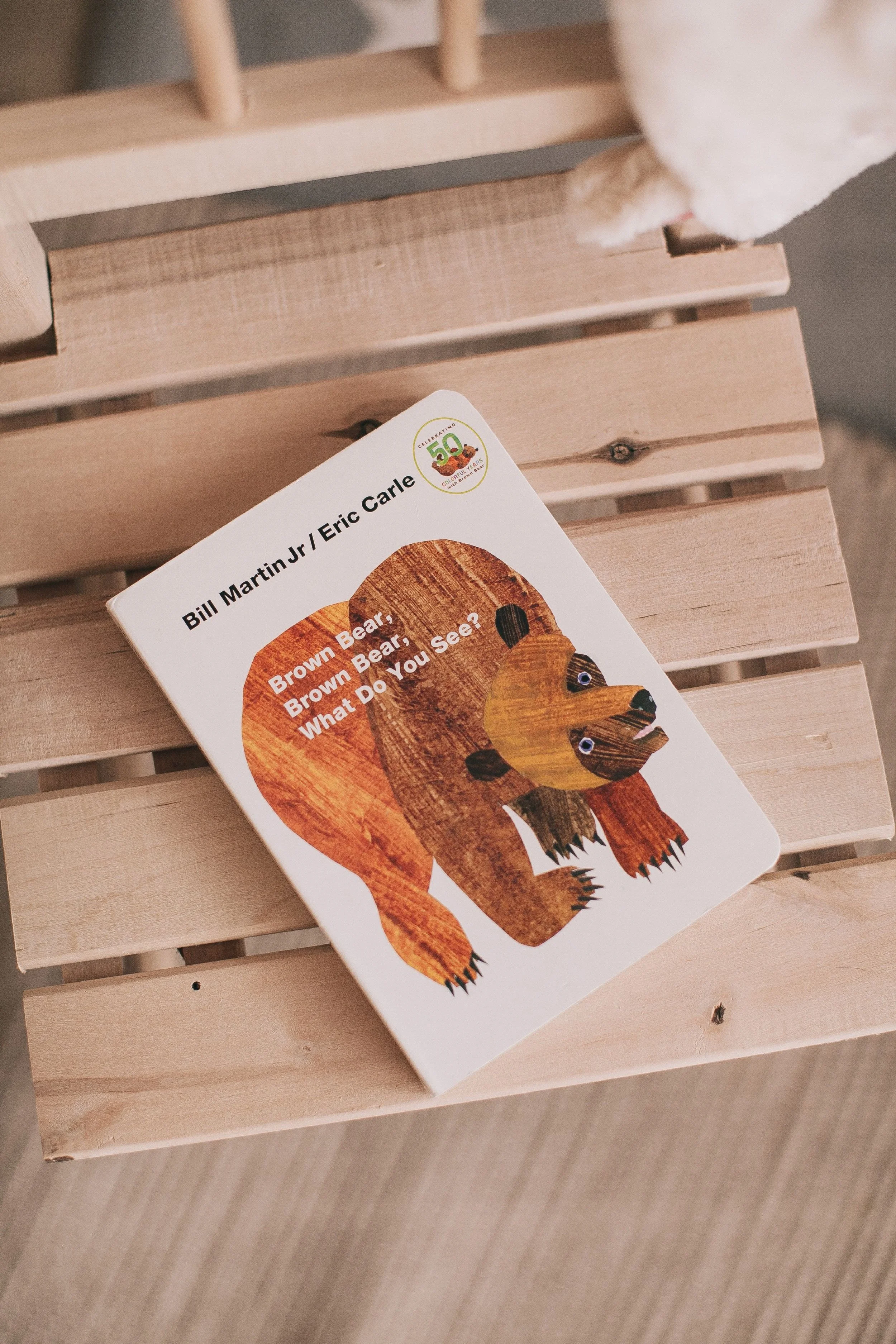
That book became a classic because it understood something simple but powerful: children love rhythm, repetition, color, and surprise. Carle’s bold animals and Martin’s musical text made the book feel less like a lesson and more like a game.
The Caterpillar That Ate Its Way Into History
In 1969, Eric Carle published his most famous book: The Very Hungry Caterpillar. The story follows a tiny caterpillar as it eats, grows, changes, and finally becomes a butterfly. Along the way, children learn about counting, days of the week, food, and transformation. The book’s clever die-cut pages also let young readers physically follow the caterpillar’s munching path through the story.
That interactive design helped make the book feel magical. Children were not just reading about the caterpillar. They were watching it chew through each page before transforming into something magical and taking flight.
Over time, The Very Hungry Caterpillar became one of the best-known children’s books in the world. It has sold tens of millions of copies and has been translated into many languages.
His Signature Style
Eric Carle’s art is instantly recognizable. He created many of his illustrations using painted tissue paper collage. He would paint tissue paper with bright colors and textures, then cut and arrange the pieces into animals, insects, plants, and people. The result looked playful, handmade, and full of movement.

"I knew even as a child that, when I grew up, I would be an artist of some kind."
- Eric Carle
His pictures are simple enough for very young children to understand, but rich enough that adults can admire the craft. That is harder than it looks. A Carle page often feels like a child’s dream made with scissors, paint, and sunlight.
Why Children Connect With His Books
Carle’s books work because they respect children’s intelligence without overwhelming them. His stories often focus on things children already wonder about:
Books like The Very Busy Spider, The Grouchy Ladybug, The Mixed-Up Chameleon, and From Head to Toe invite children to look closely, predict what comes next, and join in. That kind of participation matters. A great picture book gives the child something to do.
A Champion of Picture Book Art
Eric Carle did not only create books. He also helped honor the art form itself. In 2002, Eric Carle and his wife, Barbara Carle, founded The Eric Carle Museum of Picture Book Art in Amherst, Massachusetts. The museum celebrates picture book illustration and preserves original art for future generations.

That legacy matters because picture books are often a child’s first experience with art, storytelling, design, humor, suspense, and beauty. Carle understood that children’s books were not “lesser” books. They were often the first books that made someone love reading.
His Lasting Legacy
Eric Carle died in 2021, but his books continue to find new readers. His work endures because it carries a rare combination: simplicity, warmth, visual invention, and trust in the child reader.
He showed that a children’s book could teach without sounding like a lecture. It could be silly, beautiful, educational, and emotionally true all at once.
At Brambletale Press, we believe children deserve books that invite them into big ideas through wonder and unforgettable pictures. Eric Carle’s career is a shining reminder that the best children’s books do not talk down to kids. They kneel down beside them, point to the page, and say:
Look. Something amazing is happening.

Image Credits: Cover image: Eric Carle, 1988. Photo by Fotoburo de Boer, via Noord-Hollands Archief / Wikimedia Commons. Licensed under CC0 1.0 Public Domain Dedication.
Photo: John Phelan / Wikimedia Commons, CC BY 3.0. Image shows the Eric Carle Museum of Picture Book Art in Amherst, Massachusetts.
Disclaimer: Brambletale Press does not own or claim rights to any Eric Carle artwork, book covers, characters, or related intellectual property shown in the photos used in this article. All such materials belong to their respective rights holders. Images are included for educational and editorial commentary only, and no affiliation or endorsement is implied.
