Artist Spotlight: Issey Miyake
Few designers have blended fashion, art, technology, and movement as gracefully as Issey Miyake.
The Japanese designer built a career around one deceptively simple question: what can clothing become when it is freed from the usual rules?
For Miyake, fabric was never just fabric. It could fold, stretch, float, sculpt the body, and even seem to breathe. His best work feels less like clothing placed on a person and more like an idea coming to life around them.
Born in Hiroshima, Japan, in 1938, Miyake studied graphic design at Tama Art University in Tokyo. Even early in his career, he viewed clothing as a form of design rather than simply fashion. While still a student, he challenged the design world by asking why clothing was not being treated as seriously as architecture, furniture, or industrial design.
That curiosity shaped everything that followed.
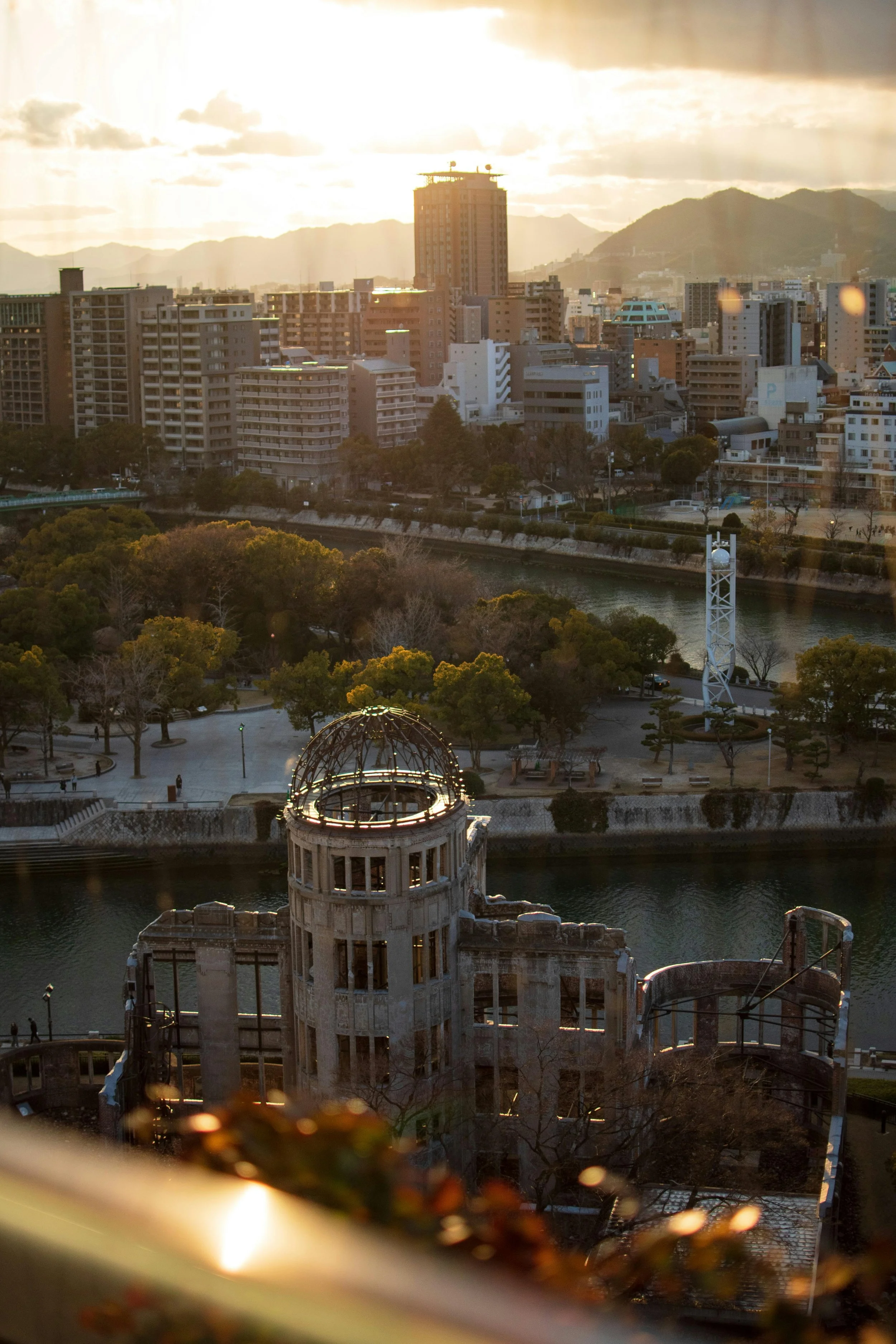
In his 2009 New York Times opinion essay, “A Flash of Memory.” In it, Miyake wrote that he was 7 years old in Hiroshima on August 6, 1945, when the atomic bomb was dropped. He described seeing a bright red light, then a black mushroom cloud, and people running in every direction. He also said he had avoided speaking about the bombing because he did not want to be labeled “the designer who survived the bomb.”
After time in Paris and New York, Miyake returned to Japan and founded Miyake Design Studio in 1970. From there, he built one of the most influential design legacies of the modern era. His work appeared on runways, in museums, in perfumes, in watches, in bags, and in everyday wardrobes around the world.
Miyake is best known for his revolutionary approach to pleating. Unlike traditional pleated garments, which are often folded before being cut and sewn, Miyake’s process involved constructing garments first, then pleating them through heat treatment. The result was clothing that could move freely, hold its shape, resist stiffness, and feel almost weightless.
His famous PLEATS PLEASE ISSEY MIYAKE line helped turn this technical breakthrough into a global design language. The garments were flexible, colorful, practical, and instantly recognizable. They looked futuristic without feeling cold. They were elegant, but never fussy.
That balance is what made Miyake special.
His designs often feel engineered, but not mechanical. They are playful, human, and full of motion. A dress might ripple like water. A jacket might fold like paper. A bag might behave like a shifting sculpture.
One of the clearest examples is BAO BAO ISSEY MIYAKE, the brand’s geometric handbag line. Made with triangular panels that flex and reshape with movement, BAO BAO bags turn a simple accessory into something architectural. They are part handbag, part puzzle, part wearable object.
Miyake’s influence also stretched far beyond clothing. His name became associated with fragrance, watches, eyewear, exhibitions, collaborations, and experimental design projects. The official Issey Miyake brand family now includes lines such as PLEATS PLEASE ISSEY MIYAKE, HOMME PLISSÉ ISSEY MIYAKE, BAO BAO ISSEY MIYAKE, A-POC ABLE ISSEY MIYAKE, IM MEN, and others.
Although Miyake died in 2022 at age 84, his design philosophy continues to guide the house. The brand’s recent collections still explore movement, transformation, and the relationship between the body and the garment.
For 2026, the Issey Miyake Spring/Summer collection, titled “Being Garments, Being Sentient,” asks a striking question: what if garments were conscious? The collection imagines clothing not as static objects, but as living forms capable of expression, growth, and transformation.
That idea feels perfectly Miyake.
His greatest contribution was not only a look, a technique, or a famous pleat. It was a way of thinking. He treated clothing as something alive with possibility. Something useful, beautiful, strange, joyful, and deeply human.
Issey Miyake did not simply design clothes.
He designed movement.
He designed surprise.
He designed the future,
then, he made it wearable.
Cover Image credits: Hsinhuei Chiou, Issey Miyake at a press conference, National Art Center, Tokyo, 2016, via Wikimedia Commons, licensed under CC BY-SA 4.0.
Featured posts are embedded from official Issey Miyake Instagram accounts and related brand sources so readers can explore the designer’s legacy directly from the original publishers. All images, videos, garments, artwork, and related materials remain the property of Issey Miyake, Miyake Design Studio, and/or their respective rights holders.
